

A tooth can look perfectly healthy on the outside and still be dealing with a serious problem on the inside. Pulp infection is one of the most common reasons patients are referred to an endodontist, and it often develops quietly before any obvious symptoms appear.
Understanding how these infections start can help you recognize risk factors, protect your teeth, and seek care before a small problem becomes a larger one.
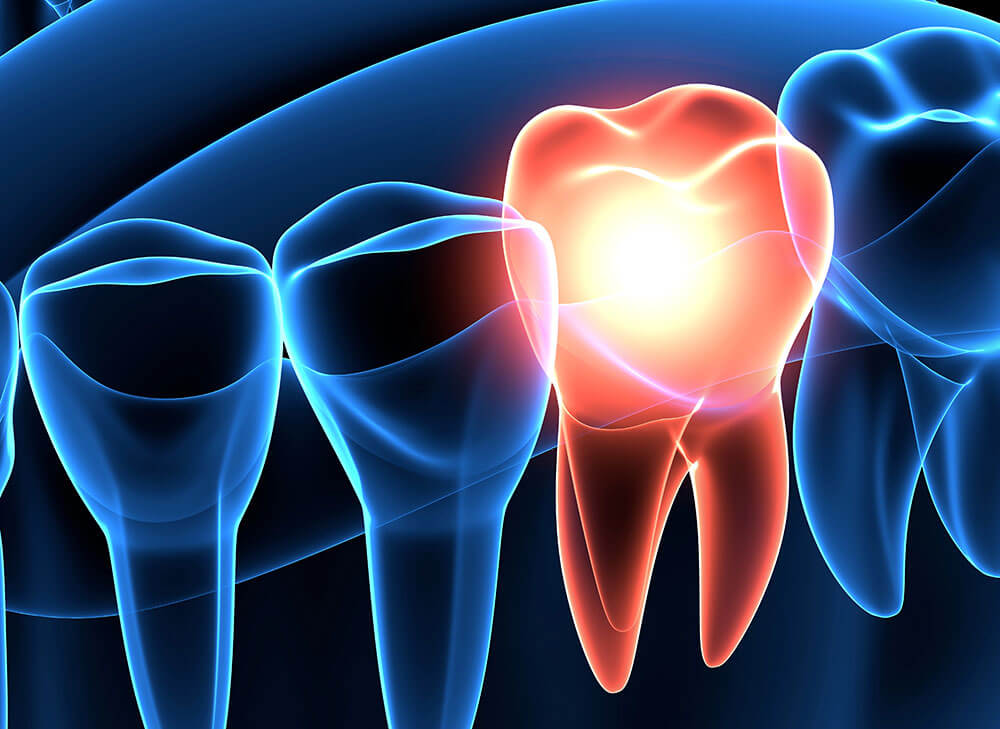
What Is Tooth Pulp, and How Does It Become Infected?
The pulp is the soft tissue at the center of every tooth, made up of nerves, blood vessels, and connective tissue. It is protected by two hard outer layers, enamel and dentin, which normally keep bacteria out. A pulp infection occurs when that barrier is breached and bacteria reach the inner tissue, causing inflammation and, eventually, infection.
Because the pulp is enclosed within the tooth, the body has a hard time fighting off bacteria once they get inside. That is why an infected pulp rarely heals without professional care.
Common Causes of Tooth Pulp Infection
Most pulp infections trace back to one of a handful of causes, and in many cases more than one factor is involved.
Deep or Untreated Tooth Decay
Tooth decay is the leading cause of pulp infection. When a cavity is left untreated, bacteria gradually work through the enamel and dentin toward the pulp. By the time decay reaches the inner tooth, the pulp is often already inflamed. Regular dental exams make it far easier to catch cavities while they are still small.
Cracks and Fractures
A crack in a tooth creates a pathway for bacteria, even when it is too small to see. Biting on hard foods, grinding or clenching, and large older fillings that weaken the tooth can all contribute. Some fractures extend below the gumline, which makes them difficult to detect without specialized evaluation.
Dental Injuries and Trauma
A blow to the mouth from a fall, accident, or sports injury can damage the pulp even if the tooth does not chip or move. Trauma can interrupt the tooth’s blood supply and leave the pulp vulnerable to infection weeks or even months later. Any injury to a tooth deserves a professional evaluation, and our team provides dedicated trauma management for patients who have experienced dental injuries.
Repeated Dental Work on the Same Tooth
Every dental procedure places some stress on a tooth. When the same tooth needs multiple fillings or restorations over the years, the pulp can become irritated and inflamed, and in some cases it does not recover.
Leaking or Failing Restorations
Fillings and crowns do not last forever. If a restoration cracks, loosens, or develops gaps at its edges, bacteria can seep underneath and reach the inner tooth. New decay beneath an old restoration is a common and often unnoticed source of pulp infection.
Advanced Gum Disease
Less commonly, infection can reach the pulp from the root side of the tooth. Deep periodontal pockets can allow bacteria to travel along the root surface and enter through tiny openings near the root tip, which is one more reason healthy gums matter.
Why Pulp Infections Are Easy to Miss
Many patients assume an infected tooth will always hurt, but that is not the case. Pulp tissue can die slowly, and pain may fade even as the infection continues to spread. At Vertex Endodontics, we use 3D imaging to look closely at root structures and surrounding bone, which helps identify problems that may not appear on a standard x-ray.
When symptoms do appear, they may include lingering sensitivity to hot or cold, pain when biting, swelling near the tooth, a bump on the gums, or a tooth that has darkened in color. Any of these signs is worth having evaluated promptly.
What Happens If a Pulp Infection Is Left Untreated?
A pulp infection does not resolve on its own. Over time, bacteria can spread beyond the root tip into the surrounding bone, forming an abscess that may cause swelling, increasing pain, and damage to the jawbone. In more serious cases, infection can spread to the face or neck and require urgent care.
Antibiotics may calm symptoms temporarily, but they cannot reach bacteria inside the tooth, so the problem tends to return. The longer an infection goes untreated, the harder it becomes to save the tooth.
How Is a Pulp Infection Treated?
The goal of treatment is to remove the source of infection and preserve the natural tooth whenever possible. For most patients, that means root canal therapy. Every case is different, so your endodontist will recommend an approach based on your diagnosis and individual needs.
If a tooth that has already been treated becomes reinfected, extraction is not always the only option. Root canal retreatment can often give the tooth a second chance to heal.
Can You Prevent a Pulp Infection?
Not every infection can be avoided, but good habits lower your risk. Brushing twice a day, flossing daily, and keeping up with routine exams and cleanings help catch decay early. A mouthguard during sports and a night guard for grinding can protect against fractures and injuries. If a filling or crown feels loose or a tooth becomes sensitive, have it checked sooner rather than later.
Schedule an Evaluation at Vertex Endodontics
If a tooth has been bothering you, or you have recently had a dental injury, the team at Vertex Endodontics is here to help. We focus exclusively on endodontic care, which means we spend our days diagnosing and treating problems that start inside the tooth.
We accept PPO dental insurance and work with each patient to review coverage before treatment begins. You can learn more on our insurance and financial policy page.
Call us at 773-373-0790 or request an appointment online to schedule an evaluation at the Vertex Endodontics location nearest you.
Frequently Asked Questions
Can a tooth pulp infection go away on its own?
No. Once bacteria have reached the pulp, the body cannot clear the infection without professional treatment. Symptoms may fade temporarily, but the infection typically remains and can continue to spread.
Is a pulp infection the same as a cavity?
No. A cavity is decay in the outer layers of the tooth, while a pulp infection involves the nerve and blood vessels inside. An untreated cavity can eventually lead to a pulp infection.
Can a tooth with a pulp infection be saved?
In many cases, yes. When the infection is addressed promptly, endodontic treatment can often preserve the natural tooth. Early evaluation gives you the best chance of keeping it.
Does a pulp infection always cause pain?
No. Some infections cause little or no pain, especially once the pulp tissue has died. Routine exams and x-rays are important for finding problems that do not announce themselves.
Disclaimer
This content is intended for general informational purposes only and does not constitute medical or dental advice. Every patient’s situation is unique, and treatment experiences may vary. Please consult with a qualified dental professional for guidance specific to your individual needs and circumstances.